 ByAdmin
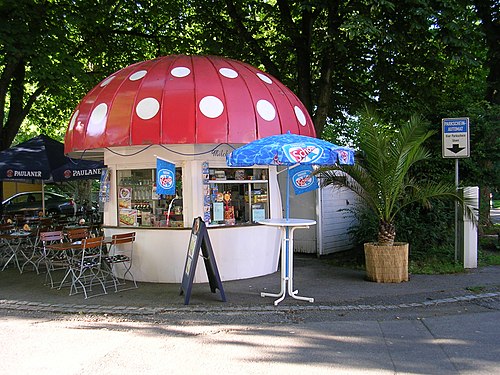
Mushroom kiosk The Wof the 1950s was reflected in the regained prosperity. Since alcohol wasn’t available until the age of 21, it was considered fashionable to meet in m At the same time in Germany, dand their products were in competition with new d which could be bought easily and conveniently at every kiosk. Milk, however, lacked such outlets.
This supply gap was to be Later, the manufacturer, Hermann Waldner KG from W had both the design and the name “mushroom kiosk” protected by law.Because a milk kiosk should have a high recognition value, Hermann Waldner’s son Anton, who was the managing director of the time, chose the striking shape of a f mushroom.
The building itself was a prefabricated w structure painted white. In its original form, the kiosks had a flexible, water-repellent roof made of p(trade name: mipolam, now known as PVC). The roof was the characteristic red colour with white spots. Milk mushrooms had a total height of around 4 metres and ha roof width of 4.6 metres. The diameter of the interior space measured 3.15 metres.However, there was resistance from the authorities: in a letter dated 12 August 1952, the Württemberg State Office for Nature Conservation and Landscape Management in Ludwigsburg wrote to the management of Waldner: “I think the design of your little milk houses in the shape of a mushroom is completely absurd. The rejection of this structure, which would be more appropriate for America, by the city building authorities would be fine. I don’t believe it takes a mushroom to make milk drinks popular. Reliable service and low prices will do more than tasteless advertising.”
You cannot copy content of this page