 ByAdmin
Buy Magic Mushroom And PTSD Online
Magic Mushroom And PTSD Before we get into how psilocybin might help, let’s make sure we’re on the same page about what PTSD actually is — because it’s widely misunderstood.
PTSD isn’t just “being stressed” or “having bad memories.” It’s a clinical condition where the brain essentially gets stuck in survival mode after a traumatic event. The threat is long https://hausofutopia.online/ gone, but the nervous system hasn’t gotten the memo. It keeps firing as if the danger is still present — every day, sometimes for years or decades.
Common PTSD symptoms include:
Here’s a number that puts the problem in perspective: approximately 13 million Americans are living with PTSD at any given time, and only two pharmacological treatments have been approved in the last two decades. Both are SSRIs (sertraline and paroxetine), and their effectiveness — particularly for veterans — leaves a lot to be desired.
The need for something new isn’t just real. It’s urgent.Magic Mushroom And PTSD
Let’s be blunt about the current landscape.
SSRIs (Selective Serotonin Reuptake Inhibitors) are the most commonly prescribed medications for PTSD. They work by increasing serotonin levels in the brain, which can help regulate mood. But here’s the problem: for many people with PTSD — especially veterans — they simply don’t work well enough.
Response rates are modest. Side effects (weight gain, sexual dysfunction, emotional blunting) are common. And they need to be taken daily, often indefinitely. For a condition rooted in deep psychological trauma, a pill that tweaks your brain chemistry by a few percentage points often isn’t enough to break the cycle.
Evidence-based therapies like Cognitive Processing Therapy (CPT), Prolonged Exposure (PE), and EMDR can be genuinely helpful. But they have significant limitations:
The result? Millions of people stuck in a loop — cycling through treatments that don’t fully work, often losing hope along the way.
Psilocybin isn’t a new discovery. Indigenous cultures have used psilocybin-containing mushrooms for thousands of years in healing and spiritual ceremonies. But in the context of modern psychiatric research, psilocybin represents something genuinely novel — a treatment that doesn’t just manage https://shroombros.co/ symptoms, but may actually help the brain process and release the underlying trauma.
Here’s the key distinction: most PTSD medications work by dampening symptoms. Psilocybin appears to work by temporarily opening a window of psychological flexibility — a state where the brain can revisit traumatic material without the usual overwhelming fear response, process it differently, and form new, healthier neural pathways around it.
It’s not about numbing the pain. It’s about finally being able to move through it.
To understand why psilocybin might be uniquely suited for PTSD, we need to look at what it does at the neurological level.
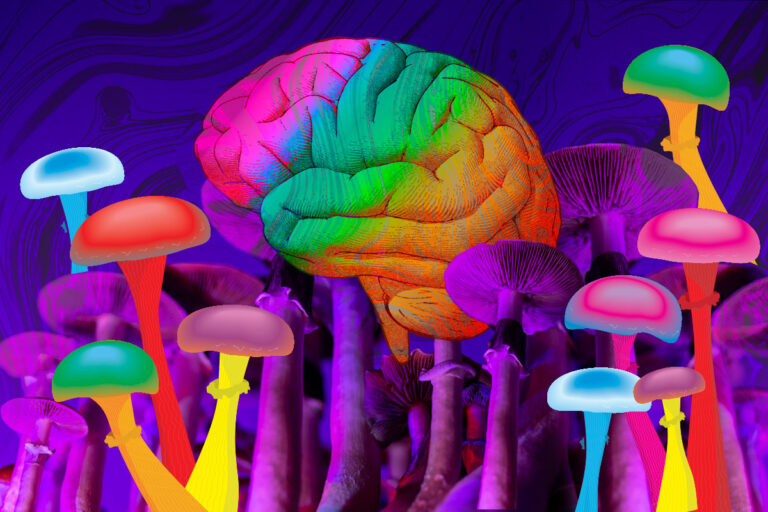
Your brain has a network of interconnected regions called the Default Mode Network (DMN). The DMN is most active when you’re engaged in self-referential thinking — ruminating about the past, worrying about the future, constructing your sense of identity, running the same mental loops over and over.
In people with PTSD, the DMN is often overactive. It’s like a broken record player stuck on the worst tracks. The same traumatic memories, the same fear responses, the same rigid thought patterns — playing on repeat, day after day.
Psilocybin temporarily quiets the DMN. It doesn’t shut it off — it loosens its grip. This creates a state where rigid mental patterns become flexible, and the brain can form new connections that weren’t available before. Researchers describe it as a “reset” — a temporary window where entrenched neural pathways can be restructured.
You cannot copy content of this page