 ByAdmin
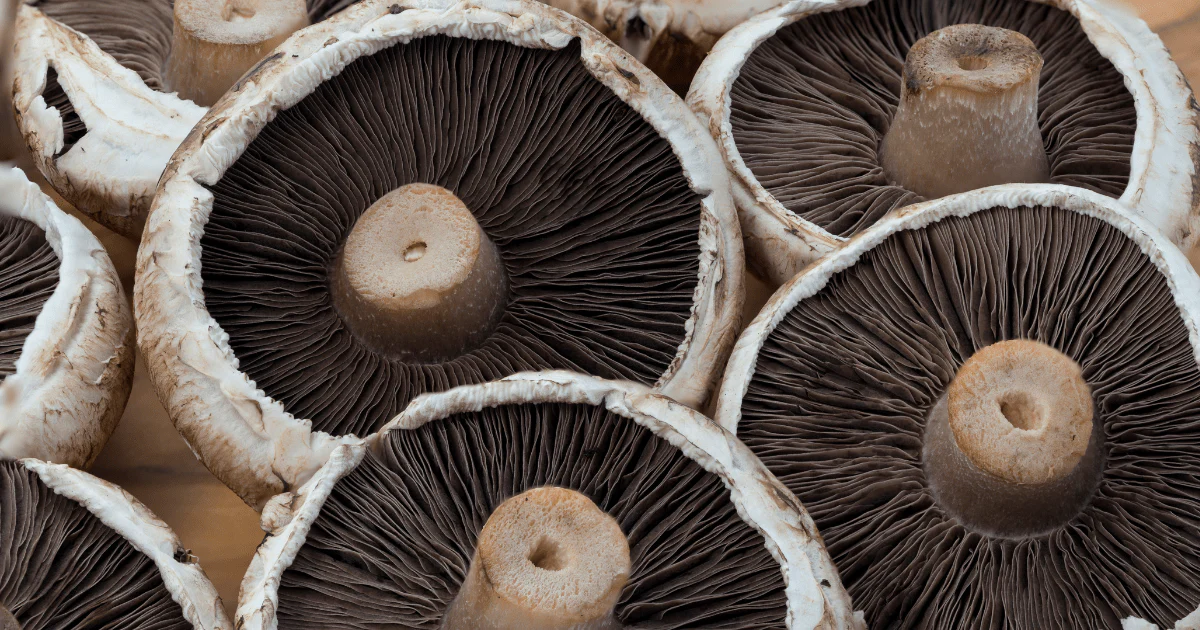
The Mushroom Mafia Conspiracy Trout’s video centres on agaritine, a naturally occurring compound found in portobello mushrooms and their smaller siblings button and cremini mushrooms (they’re all the same species, Agaricus bisporus, just at different stages of maturity).Here’s what we know. Agaritine is a hydrazine derivative that’s present in at least 24 mushroom species, with concentrations in raw portobellos ranging from about 0.03% to 0.17% of their fresh weight. The highest levels are found in the caps and gills.The concerning part is that some studies from the 1980s found that when mice were fed agaritine, they developed bladder tumours at statistically significant rates. The compound is also structurally similar to rocket fuel additives (yes, really), and it can potentially be converted into hydrazine, which is used in explosives and propellants.
So the plot thickens…
The conspiracy really kicked into high gear in 2022 when renowned mycologist Paul Stamets appeared on Joe Rogan’s podcast. During their discussion about mushrooms, Stamets warned Rogan to always cook portobellos at high heat because when raw they contain toxic chemicals. When pressed to elaborate, he said something that still gives me chills:
“This is an explosive area of conversation, and that puts my life in danger, so I reserve the right not to answer your question.”

Then he just stopped talking about it. The world’s most famous mushroom guy. The one person whose entire career revolves around mushrooms. Wouldn’t talk about this specific mushroom and its supposed risks.
What the hell?
Here’s where Trout’s video gets even weirder. Apparently, there are powerful lobbying groups (like the American Mushroom Institute and the Mushroom Council) that have a vested interest in keeping mushrooms in your shopping cart.
And according to Trout, virtually every study showing portobellos are safe has been either funded by or peer-reviewed by scientists connected to these groups – a clam that lacks evidence.
He also points out something called “food libel laws” that exist in 13 U.S. states. These laws make it possible to sue someone for making unproven claims about food products. Which means even discussing potential risks could land you in legal hot water.
That’s concerning, but life threatening?
Trout takes us on a detour to Italy (Europe’s top mushroom producer) where things get slightly darker.
In the 2010s, he says Italian anti-mafia forces discovered mushroom farms being used for money laundering, that a whistleblower in 2018 was disappeared, a food safety scientist’s lab “accidentally” exploded while he was studying fungal carcinogens, and a journalist was beaten and robbed while investigating black market mushroom operations.
Is this all true? I don’t think. He doesn’t cite sources and I could only find credible evidence for the Italian mafia infiltrating huge swathes of the country’s agriculture and food business and falsifying certificates.
No mention of mushroom farms, whistleblowers or sabotage though.
But it’s certainly a compelling narrative.

Here’s where I have to step back and be the voice of reason (or at least try to be).
The science is genuinely mixed. While agaritine is recognised as an experimental carcinogen in high laboratory doses, there’s inadequate evidence to classify it as carcinogenic to humans in the amounts consumed through eating mushrooms.
More importantly, cooking significantly reduces agaritine content by up to 90%, and up to 75% through freezing. Microwaving is particularly effective, reducing levels by about 65% in just one minute.
Additionally, a large Harvard study examining mushroom consumption and cancer risk in humans found no association between eating mushrooms and developing cancer. In fact, a 2021 study found that eating 18 grams of mushrooms daily decreased overall cancer risk by 45%, particularly for breast cancer.
What about the mouse studies that showed tumour development? Those mice were given extremely high doses, the equivalent of a year’s worth of raw mushrooms each day. That’s not even remotely close to normal human consumption.