 ByAdmin
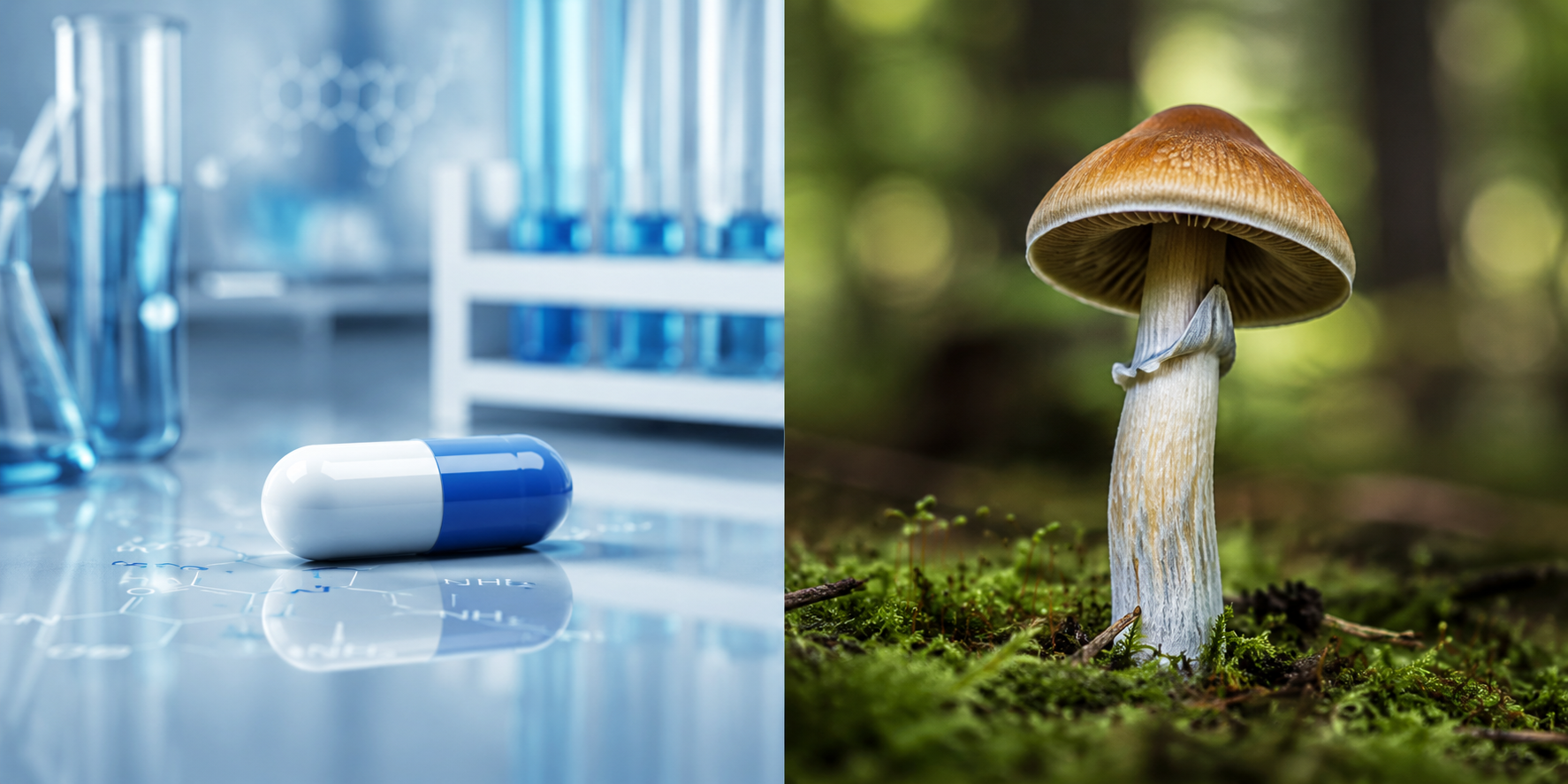
Natural Psychedelics vs Synthetic Psychedelics For thousands of years, humans have found mind-altering compounds the hard way. They boiled woody vines, scraped bitter bark, milked toad glands, and in one particularly committed episode of early pharmacology, drank the urine of reindeer that had eaten psychedelic fungi.That trial-and-error process gave us a small collection of extraordinary compounds: psilocybin, DMT, mescaline, ibogaine. Molecules capable of dissolving the ego, reframing trauma, interrupting addiction, and producing what many describe as the most meaningful experiences of their lives.Now, with psychedelic research entering the mainstream, scientists are asking a question that doesn’t sit right with everyone: can we do better than what nature accidentally gave us?The answer, depending on who you ask, is either an enthusiastic yes or a cautious probably-not-the-point.
The pro-engineering argument starts with the observation that nature isn’t optimising for your healing. Evolution doesn’t care about human therapeutic outcomes. These compounds exist because they gave their host organisms some survival advantage. That they happen to do remarkable https://mushies.co.uk/ things to the human nervous system is, from nature’s perspective, a coincidence.Take ibogaine. A single dose can interrupt opioid dependence in ways that last months, which is something no conventional medication reliably achieves. That’s extraordinary. But ibogaine is also hard on the heart. People have died during sessions from cardiac events. The gap between “enough to work” and “dangerous for the heart” is narrow enough that its clinical use remains limited.Researchers are presents a different version of the same argument. It’s essentially non-toxic and there are no recorded fatal overdoses. But a standard dose is six to eight hours of intense psychological experience that can, even in carefully controlled settings with screened participants and trained guides, tip into psychosis-like states https://thesporereport.com/ of profound dissociation. Researchers at Johns Hopkins describe it as “climbing a mental mountain.” And not everyone makes it easily to the top.Several companies are now developing faster-metabolising versions of psilocybin that compress the experience to three or four hours. One company, Reunion Neuroscience, has Phase 2 trial data from a study in women with postpartum depression showing early signs of clinical effectiveness from such a compound. Others are working on nasal sprays, injectables, and dissolvable strips for more precise dosing.More ambitiously, a San Francisco company called Mindstate Design Labs has built a database of over 70,000 first-person trip reports, pulled from decades of recreational pharmacology records, clinical materials, and the notebooks of legendary underground chemist Alexander Shulgin. Something that, in one researcher’s description, “just kind of cruises to the end.”