 ByAdmin
Magic mushrooms don’t grow from seeds. They grow from spores, which are microscopic single-celled propagules, and cultivation usually works best only when temperature and humidity are tightly controlled around 75–80°F (24–27°C) for colonization and 90–95% relative humidity during fruiting.If you searched for magic mushroom seed, you’re in good company. A lot of beginners use that phrase because seeds are familiar. Plants have seeds, so it seems natural to assume mushrooms do too.But mushrooms aren’t plants, and that one difference changes everything. Once you understand what spores are, what mycelium does, and why growing fungi is more like running a tiny biological lab than planting herbs on a windowsill, the whole topic becomes much easier to make sense
You type “magic mushroom seed” into a search bar, expecting something like basil or tomato seeds. That wording makes sense at first. Gardening gives people a familiar map. Fungi follow a different one.
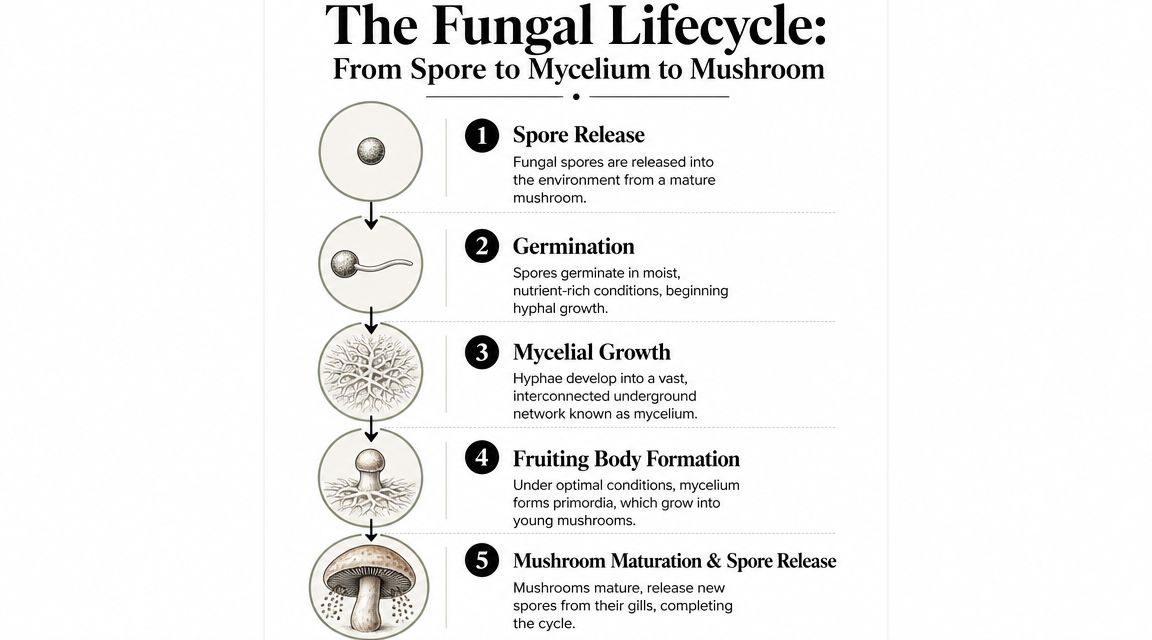
A magic mushroom seed usually means a mushroom spore. A spore is a microscopic reproductive cell, not a tiny mushroom and not a plant embryo. The visible mushroom comes much later, after those spores help start a living network called mycelium.
That helps explain why popular language often comes before biological accuracy. People learn the cultural phrase first, then sort out the science later.
A helpful mental model for beginners is:
That last point matters. Spores can spark curiosity, but cultivation is closer to a careful lab hobby than a beginner gardening project. For many people, that is exactly why ready-to-use mushroom products feel simpler and more reliable when the goal is the experience, not the challenge of growing fungi from scratch.
Fungi have been around for a very long time. According to a University of Utah summary of psilocybin mushroom evolution, the genus Psilocybe likely arose about 65 million years ago, and the ability to produce psilocybin first emerged in that genus before later moving to other mushroom lineages.
That long evolutionary story helps explain why fungi operate so differently from plants. They follow their own biological rules.
A seed is like a packed lunch plus instructions. A spore is more like a tiny biological blueprint that still needs the right environment before anything useful happens.
| Characteristic | Fungal Spore | Plant Seed |
|---|---|---|
| Basic structure | Single-celled propagule | Multi-part plant structure |
| Embryo present | No | Yes |
| Food reserve | Not like a plant seed | Yes, typically stored |
| Size | Microscopic | Usually visible to the eye |
| What it starts | Fungal growth | Plant growth |
If you’re browsing psilocybin mushroom spores, this distinction is the first thing to understand. A spore isn’t a miniature mushroom waiting to unfold on its own.